
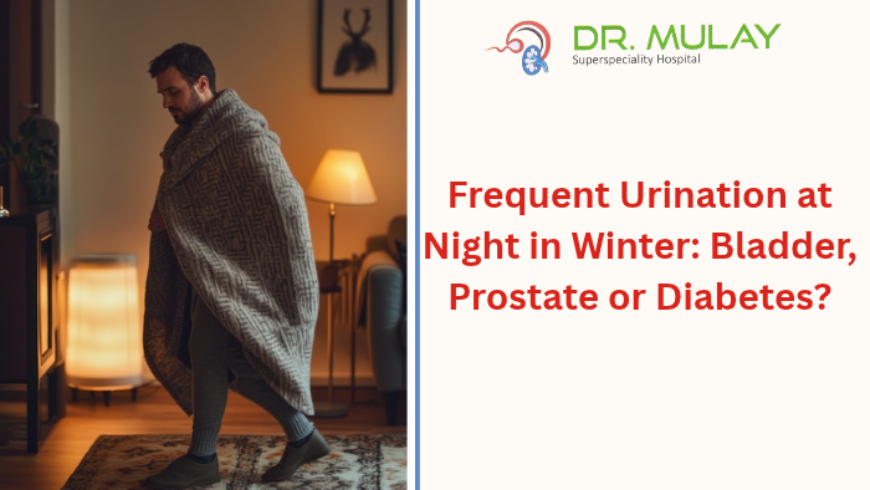
Frequent Urination at Night in Winter: Bladder, Prostate or Diabetes?
Waking once in the night to pass urine can be common, especially as people get older. Waking several times, or noticing a sudden change in winter, is different. Frequent urination at night in winter may be linked to evening drinks, a bladder problem, an enlarged prostate in men, or, in some cases, diabetes.
This article explains how these causes can differ and when a review is advisable. Only an examination and tests can identify the reason in an individual case.
What Is Frequent Urination at Night?
The medical term for waking at night to pass urine is nocturia. The Oxford Health NHS Bladder and Bowel Service notes that it is normal for adults to wake once a night to urinate, and that this can increase with age.
Doctors often look at three broad patterns, which may overlap:
- More urine than usual at night (nocturnal polyuria), when a large share of the day’s urine is made while you are in bed
- A bladder that holds less, or empties poorly, so you feel the need to go even when the volume is small
- Waking for another reason, such as poor sleep or pain, and then passing urine while already awake
A change that disturbs sleep, starts suddenly, or comes with other symptoms should be checked, rather than put down to the season alone.
Why Can Frequent Urination at Night in Winter Be More Noticeable?
Cold months can change daily habits and how the body handles fluid. People often drink more tea, coffee or other warm drinks in the evening. Caffeine and alcohol can irritate the bladder and increase urine production. In colder weather, less fluid may be lost as sweat, so more of what you drink may leave the body as urine.
These seasonal patterns can make frequent urination at night in winter more obvious, but they do not rule out a bladder, prostate or blood sugar problem.
Could It Be a Bladder Problem?
A bladder cause is more likely when you pass small amounts often, feel a sudden urge, or have similar symptoms during the day as well as at night. Possible reasons include:
- Overactive bladder, with urgency and frequent trips to the toilet. Our article on overactive bladder causes, symptoms and treatment options explains this in more detail.
- Urinary tract infection (UTI). The NHS lists needing to pee more often than usual during the night as one possible UTI symptom, along with burning, cloudy or blood-stained urine, lower tummy or back pain, and fever or shivering.
- Bladder irritation from caffeine, fizzy drinks, alcohol or, in some cases, stones or infection
- Incomplete emptying, so the bladder fills again sooner
Women can also have bladder symptoms related to pregnancy, childbirth or the menopause. Fever, pain or blood in the urine with a possible infection needs prompt medical care.
Could It Be the Prostate?
In men, an enlarged prostate is a common cause of passing urine more often, including at night. The prostate sits below the bladder and surrounds the urethra. As it grows, it can narrow that tube and make emptying less complete.
The NHS page on enlarged prostate describes symptoms such as difficulty starting, a weak stream that stops and starts, incomplete emptying, dribbling afterwards, and needing to pass urine more often or more urgently, including at night.
These symptoms often develop slowly. The NHS also notes that similar symptoms can sometimes be caused by other conditions, including prostate cancer, which is why they should be assessed rather than ignored. Our article on why men in their 40s should start monitoring prostate health covers related signs. Blood in the urine, pain while passing urine, or being unable to pass urine at all needs urgent care.
Could It Be Diabetes?
Diabetes can increase how much urine the body makes, by day and by night. High blood sugar leads the kidneys to pass more glucose and water into the urine, which can cause thirst and frequent urination.
According to the NHS, the most common symptoms of type 2 diabetes are feeling very tired, peeing more than usual, feeling thirsty all the time, and losing weight without trying. Other symptoms can include blurred vision, cuts that take longer to heal, and itching or repeated thrush, as also noted by the NIDDK.
Type 2 diabetes symptoms may appear gradually, and not everyone has obvious symptoms, so a blood test is needed to confirm the diagnosis. Night-time urination alone does not mean you have diabetes, but this symptom plus unusual thirst, tiredness or unexplained weight loss should be checked promptly.
What Else Can Cause Night-Time Urination?
The cause is often mixed. Other factors may include evening tea, coffee, alcohol or large drinks close to bedtime; diuretics (water tablets); fluid that collects in the legs by day and is reabsorbed when you lie down; sleep problems such as sleep apnoea; and age-related hormone changes that increase overnight urine. Do not change a prescribed medicine without medical advice.
How Is the Cause Identified?
A doctor will usually start with your symptoms, other conditions and medicines, and a simple examination. The Oxford Health service describes a typical assessment that may include a urine test, a bladder scan to see if the bladder is emptying, and a bladder diary of fluids and urine output. Blood tests for sugar and kidney function, and, in men, prostate-related checks, may follow. Treatment depends on the cause and may involve evening fluid changes, treatment of an infection, medicines, or further urology or diabetes care.
Individual cases vary, and a plan is made only after evaluation. Do not sharply cut fluids on your own, especially if you have unusual thirst or known diabetes.
When Should You See a Doctor?
Book a consultation if frequent urination at night in winter is disturbing your sleep or is getting worse.
Seek urgent medical care if you have:
- Blood in the urine, or pink, red or brown urine
- Pain or burning while passing urine, with fever, chills or back pain
- Inability to pass urine
- Extreme thirst, unexplained weight loss and marked tiredness
- Confusion, shaking or a high temperature, in older adults
These signs can point to infection, a blockage or a blood sugar problem that should not wait.
Frequently Asked Questions
1. Is it normal to wake up once at night to pass urine?
Waking once a night can be common in adults and may increase with age. Waking several times, a sudden change, or sleep-disturbing night-time urination is worth discussing with a doctor, especially if you also have urgency, a weak stream, thirst or pain.
2. Why do I urinate more at night in winter?
In winter, people often drink more tea or coffee in the evening, and less fluid may be lost as sweat, so more may be passed as urine. These habits can add to night-time trips, but they may not be the only reason if the problem is frequent or persistent.
3. How can I tell if it is the bladder, the prostate or diabetes?
Bladder problems often cause urgency and frequent small volumes, sometimes with daytime symptoms or burning. Prostate-related symptoms in men often include a weak stream, straining and incomplete emptying. Diabetes is more likely if you also have unusual thirst, tiredness or unexplained weight loss. Only tests can confirm the cause.
4. When is frequent urination at night a warning sign of diabetes?
It becomes more concerning when it occurs with constant thirst, tiredness, unexplained weight loss, blurred vision or repeated infections. Type 2 diabetes can develop gradually, and some people have few symptoms, so a blood test is the way to find out.
5. What can I do at home while I wait for an appointment?
You can reduce caffeine and alcohol, especially in the evening, and avoid large drinks close to bedtime, unless a doctor has advised otherwise. Keep a simple diary of fluids and night-time trips. Do not ignore blood in the urine, fever, severe pain or an inability to pass urine.
6. Should women also get night-time urination checked?
Yes. Women can have nocturia from an overactive bladder, a urine infection, pregnancy-related changes, incomplete emptying or a cause such as diabetes. The same urgent signs apply, including fever, pain, blood in the urine or unusual thirst.
Consult a Urologist About Night-Time Urination
If frequent urination at night in winter is affecting your sleep or you are unsure whether the cause is the bladder, the prostate or blood sugar, a consultation can help identify the next steps. Dr. Abhirudra Mulay, Consultant Urologist, Andrologist and Renal Transplant Surgeon at Dr. Mulay Superspeciality Hospital, has practised in the Hadapsar area for over 12 years. Conditions he assesses include urinary frequency.
Phone: 020 2972 0020
Address: Bhagwan Tatyasaheb Kawade Rd, Bhaskar Colony, Swami Vivekananda Nagar, Lakshmi Nagar, Wanowrie, Pune, Maharashtra 411040
📍 Dr. Mulay Superspeciality Hospital on Google Maps | Book your consultation
This article is general information, not a diagnosis. Individual cases vary, and treatment is planned only after evaluation.













No Comments